When you hear the word ‘biopsy’, you probably imagine a scalpel or some other surgical instrument. After all, the word implies cutting out a sample of tissue and sending it to the lab for analysis.
But not at Skintel. Here, we see skin differently.
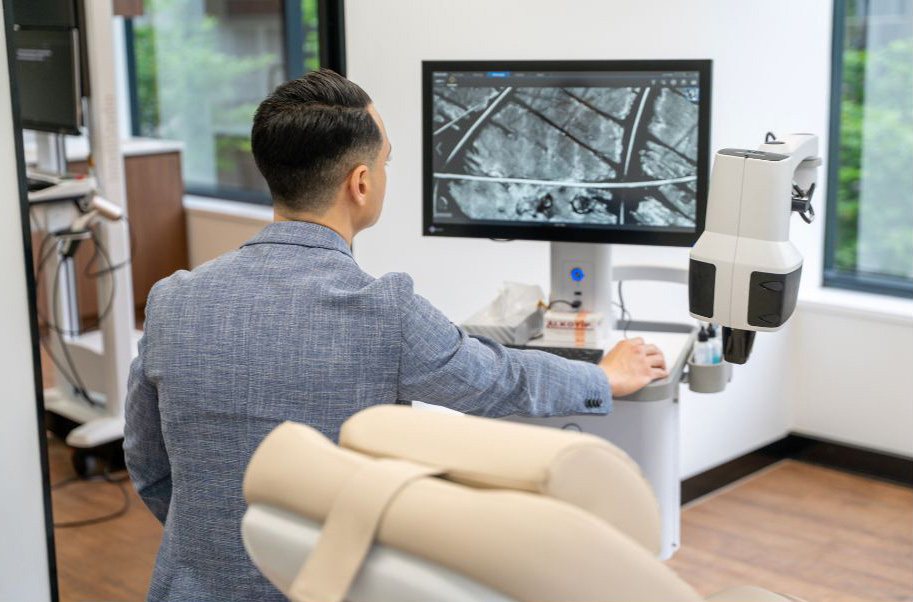
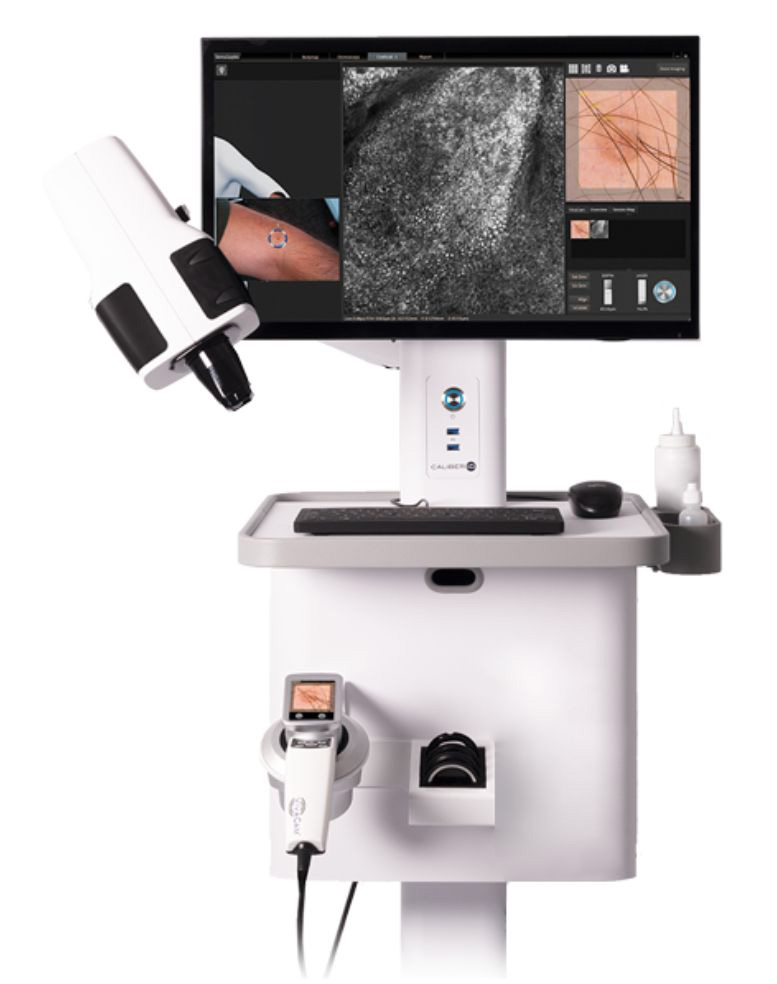
Our optical biopsy uses non-invasive light waves to delve beneath the surface of your skin. This advanced imaging technology enables us to explore individual skin cells, blood vessels, and surrounding tissue in real-time, in 3D, at up to 550 times magnification – without the need for cutting or removing any skin.
There’s no scalpel in sight—just a high-tech, comfortable way to assess suspicious spots and determine whether further treatment is necessary.
Benefits of optical biopsy
Non-invasive
No cutting, stitches or scarring involved – ideal for visible areas like the face.
Fast results
Imaging is immediate, saving you an anxious wait and allowing for more timely clinical decisions.
More comfortable
Avoids the anxiety and discomfort associated with surgical procedures.
Precision
Helps pinpoint the exact area for surgical biopsy if one becomes necessary.
At Skintel, our skin cancer screening involves 3 key stages:
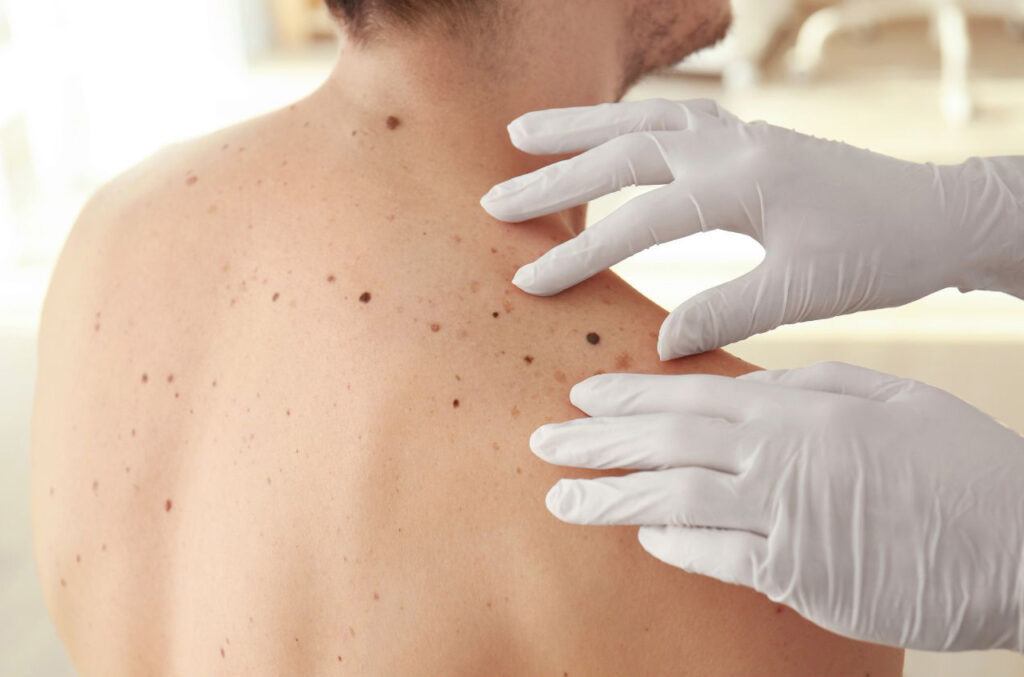
Body mapping – a high-resolution scan of your moles
Dermoscopy – a closer examination of suspicious moles or lesions using a handheld device that magnifies your skin cells
Optical biopsy – used to detect skin cancer without the need for a surgical biopsy (in most cases).
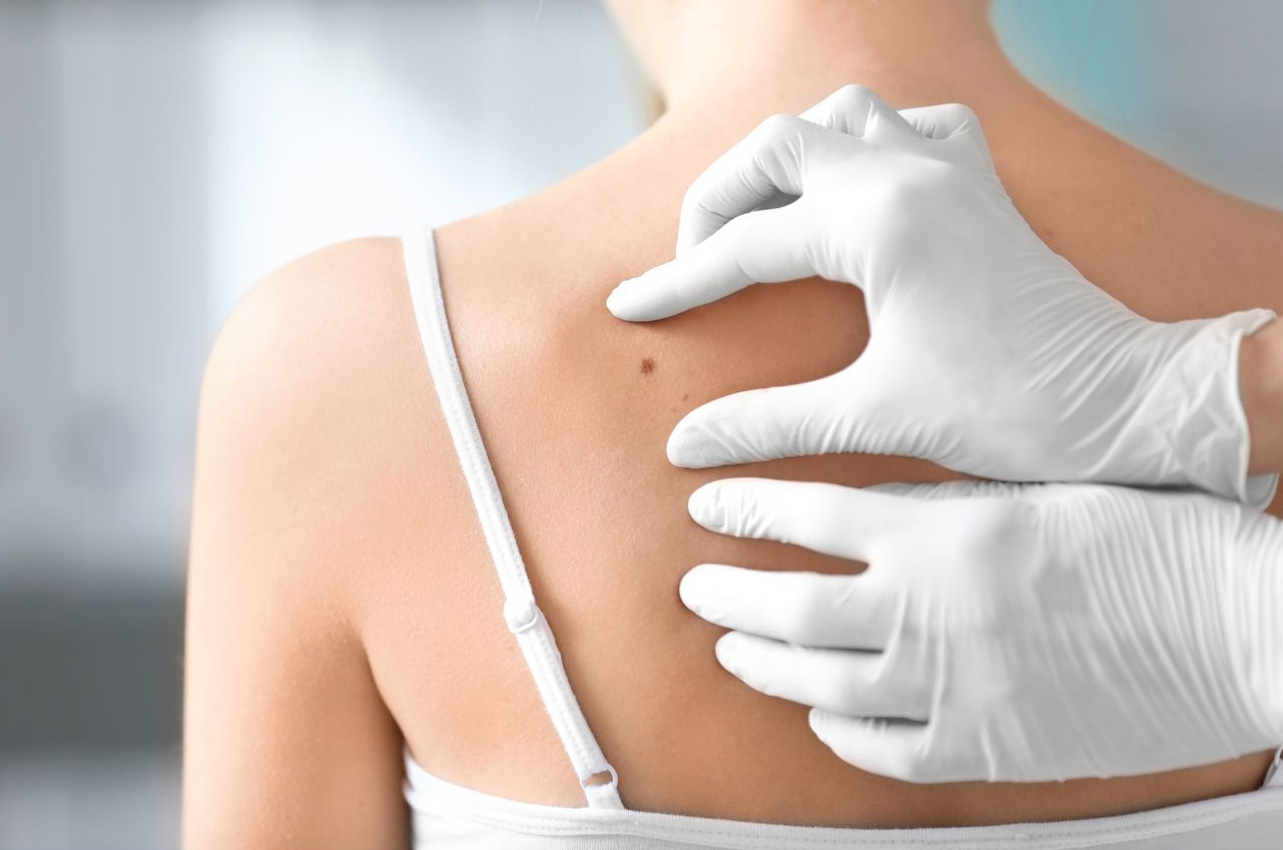
Your skin cancer screening may stop after step 1 or 2 if all is well. However, if suspicious moles or lesions are identified, then we may recommend an optical biopsy to rule out or diagnose skin cancer.
Optical biopsy offers a highly detailed view, helping your doctor decide whether further action, such as a traditional biopsy or treatment, is required.
How does optical biopsy work?
It focuses a laser light onto a single point within the skin. As the light reflects off the skin’s cellular structures, it’s captured and used to build a detailed, layered image – similar to looking at a skin biopsy under a microscope, but without making an incision.
When used in mole and lesion checks, this technology can reveal:
Abnormal cellular shapes
Unusual cell clusters
Changes in skin structure are consistent with early skin cancer.
The entire process is quick, comfortable and carried out on the skin’s surface without any cutting.
What happens after an optical biopsy?
Once your optical biopsy has been completed, a detailed diagnostic report will be prepared by our skin cancer doctor. This report will be provided to your referring doctor, your usual GP, or dermatologist. They will use this information to guide any next steps in your care, which may include:
Monitoring the area over time
Arranging further tests, such as a traditional surgical biopsy
Planning treatment
Book your skin check today
If it’s been a while since your last skin check – or if you’ve noticed changes to a mole – book your appointment with Skintel today.