
Can Skin Cancer Be Painless?
A common question patients ask is: does skin cancer hurt?
The answer is often surprising. Yes, skin cancer can be painless, particularly in its early stages.
Many people expect skin cancer symptoms to include pain, itching, or bleeding. In reality, some of the most serious skin cancers cause no discomfort at all, which is why they can be easy to miss.
Why skin cancer doesn’t always cause pain
Skin cancers usually develop slowly and often remain confined to the upper layers of the skin for some time. Because they may not initially irritate nerves or cause inflammation, pain is not a reliable early sign of skin cancer.
In fact, pain is more commonly a late symptom, occurring only once a lesion has grown, ulcerated, or become inflamed.
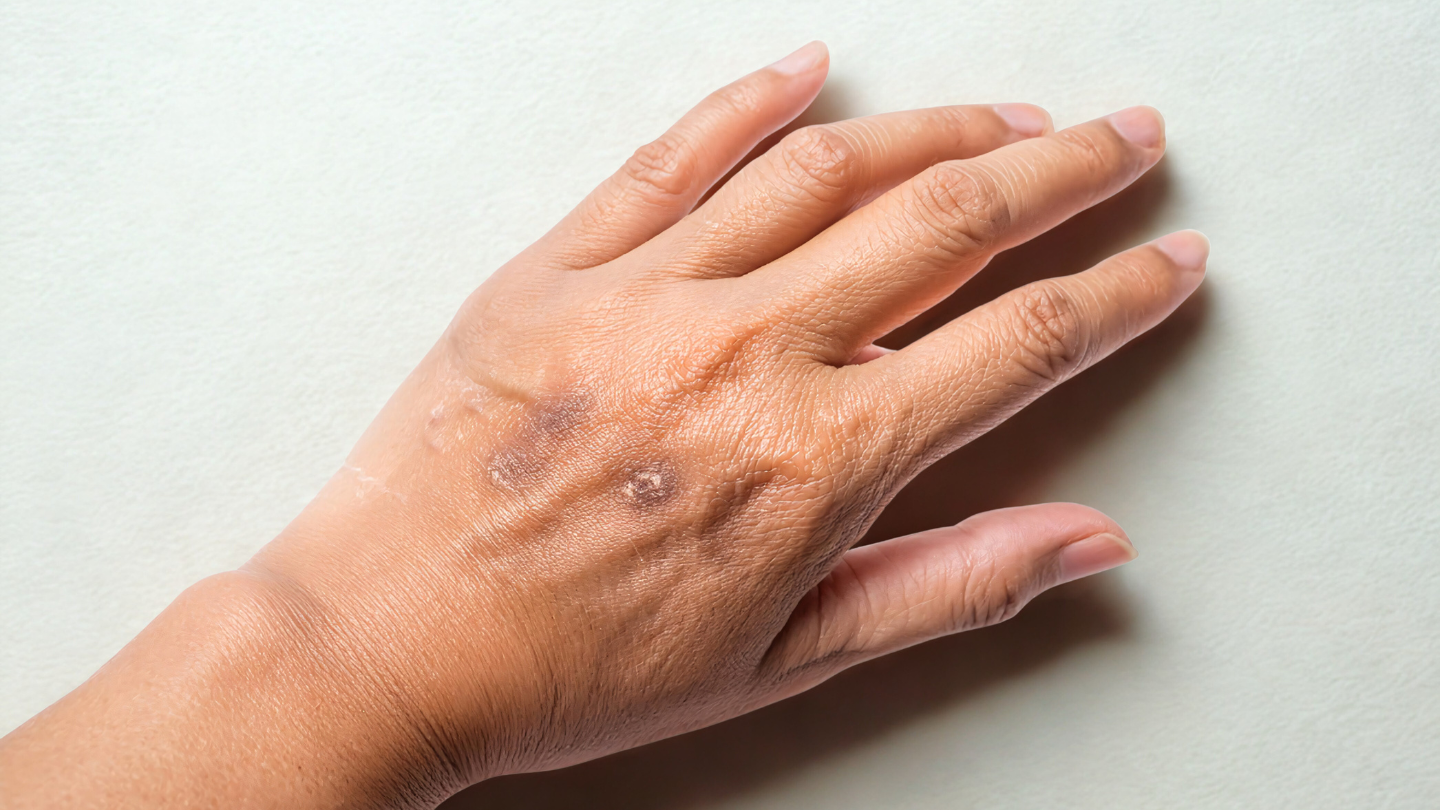
This means a lesion can be abnormal—or even malignant—while still feeling completely normal.
Which skin cancers are commonly painless?
Basal cell carcinoma (BCC)
Basal cell carcinoma is the most common form of skin cancer and is frequently painless. It may appear as:
-
A pearly or shiny bump
-
A pink or skin-coloured lesion
-
A sore that doesn’t heal
Because BCCs often don’t hurt, they’re sometimes dismissed as minor or harmless.
Squamous cell carcinoma (SCC)
Early squamous cell carcinomas may also be painless. They can present as:
-
Rough, scaly patches
-
Thickened or crusted areas
-
Persistent non-healing lesions
Pain or tenderness may develop later, but early SCC can exist without noticeable symptoms.
Melanoma
Melanoma, the most serious type of skin cancer, is often completely painless, especially in its early stages. Many melanomas are discovered during routine skin checks rather than because they caused discomfort.
This is why relying on pain as a warning sign can delay diagnosis.
If skin cancer doesn’t hurt, how is it usually noticed?
Most people notice skin cancer because of visual changes, not physical symptoms.
Early signs of skin cancer often include:
-
A new spot on the skin
-
A mole that changes in size, shape, or colour
-
A lesion that looks different from the surrounding skin
-
A spot that doesn’t heal over time
These changes may occur gradually and without pain, making regular skin checks important—even when the skin feels normal.
Should a painless skin lesion be checked?
Yes.
Painless skin cancer is common, and the absence of pain does not mean a lesion is harmless. Any spot that is new, changing, unusual, or persistent should be assessed by a medical professional.
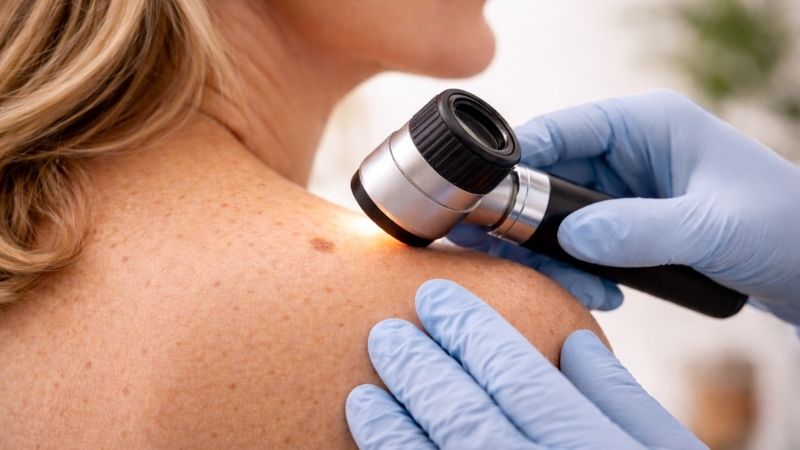
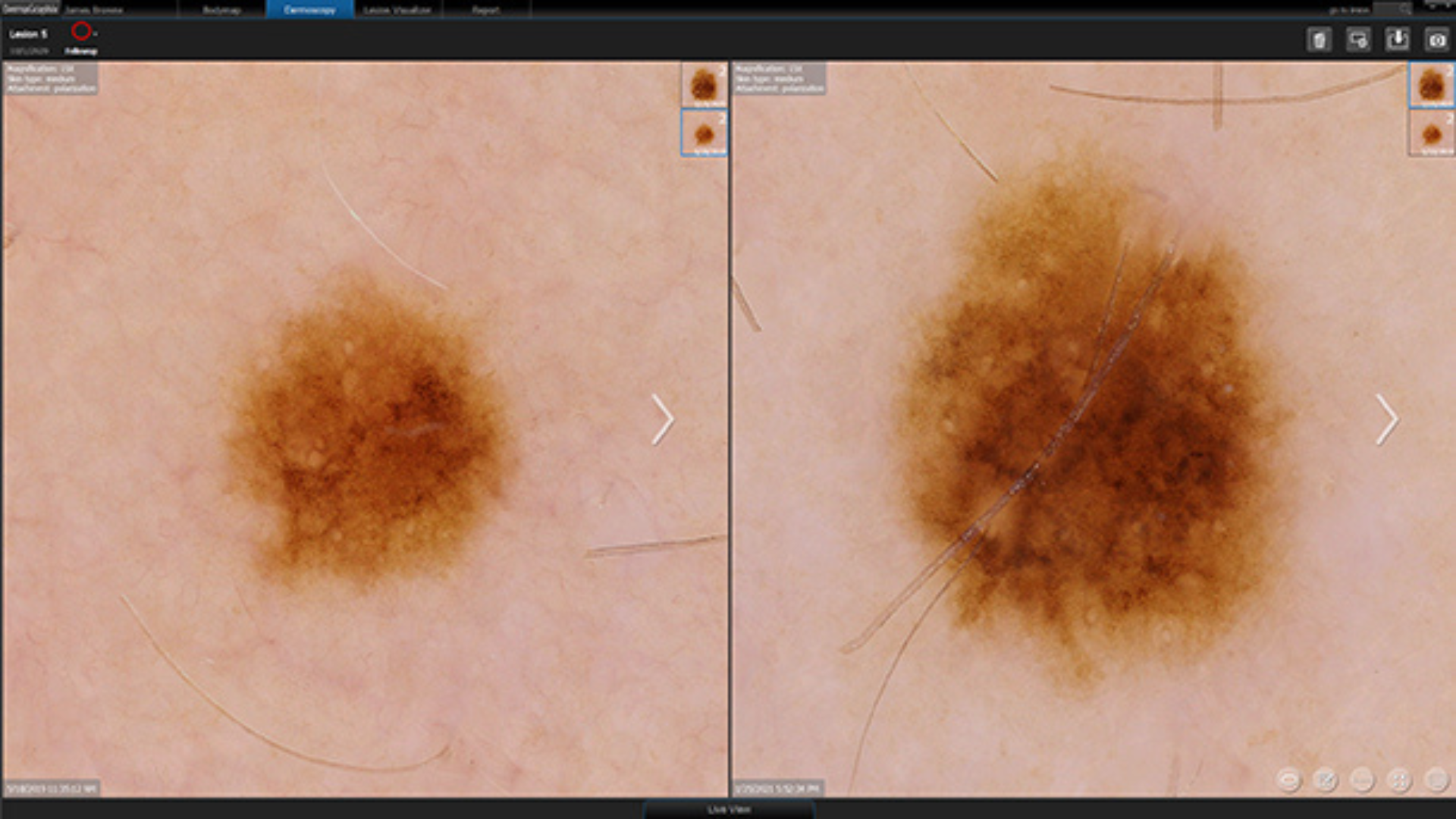
Non-invasive imaging techniques such as dermoscopy and confocal microscopy can often help determine whether a lesion is benign or suspicious, sometimes avoiding unnecessary surgical biopsy.
The bottom line
-
Skin cancer can be painless, particularly early on
-
Pain is not a reliable indicator of skin cancer
-
Visual changes are often the first warning signs
-
Early assessment improves outcomes and peace of mind
If you’re unsure about a spot, having it checked can provide reassurance and clarity—even when it doesn’t hurt.