
Advanced skin imaging can involve several different services, and they are not all funded in the same way. A consultation, total-body photography, digital dermoscopy, reflectance confocal microscopy, and a surgical biopsy are different services with varying costs and funding arrangements.
The short answer is this: Medicare does not provide a dedicated rebate simply for routine skin cancer screening or for advanced skin-imaging components such as total body photography and reflectance confocal microscopy. Depending on the nature of the consultation, clinical circumstances and applicable Medicare requirements, a Medicare benefit may apply to some medical services. Patients should confirm fees and any potential Medicare rebate with the clinic before attending.¹˒²
Reflectance confocal microscopy, also called optical biopsy, does not attract a Medicare rebate in Australia. The full cost of reflectance confocal microscopy is borne by the patient.¹˒³
What is the difference between a fee, a Medicare rebate and private cover?
These terms are often used interchangeably, but they mean different things.
A clinic fee is the amount charged by the provider for an appointment or imaging service.
A Medicare rebate is a government benefit that may be available for an eligible Medicare service listed in the Medicare Benefits Schedule, subject to the item requirements and circumstances of care. MBS Online is the official list of services subsidised by the Australian Government.¹
A private-health benefit is a payment made by your health insurer under your individual policy. It is separate from Medicare. Having private health insurance does not automatically mean an outpatient consultation, diagnostic imaging service, mole mapping appointment or skin check will be covered.
Your out-of-pocket cost is the amount you pay after any applicable Medicare rebate or private-health benefit has been applied.
A service can have a fee even where no rebate exists. Equally, the existence of a rebate does not determine whether a particular service is clinically appropriate. The decision should be based on your personal risk, the lesion being assessed and whether the information is likely to change management.
Is reflectance confocal microscopy covered by Medicare in Australia?
No. Reflectance confocal microscopy, commonly called RCM or optical biopsy, does not attract a Medicare rebate in Australia.¹˒³ The full cost of reflectance confocal microscopy is borne by the patient.
RCM is a highly specialised, non-invasive diagnostic imaging technique. It uses a low-power laser to create detailed images of structures within living skin, helping trained clinicians obtain additional information about selected lesions. It may be useful when a lesion remains uncertain after clinical examination and dermoscopy.³˒⁴
It does not involve cutting the skin, needles or removal of tissue. However, it does not replace surgical biopsy when tissue diagnosis is clinically necessary.³˒⁴
Why is optical biopsy not covered by Medicare?
Medicare funding depends on whether a service has an appropriate item in the Medicare Benefits Schedule and whether that item’s requirements are met. MBS Online is the Australian Government’s official schedule of Medicare-subsidised services.¹
The absence of a Medicare rebate for RCM does not mean the technology lacks clinical evidence or clinical value. It means there is currently no Medicare benefit available for the RCM service itself.¹˒³
RCM reimbursement is established in some overseas healthcare systems, while Australian funding pathways and access remain comparatively limited. Reimbursement status alone should not be used to judge whether a test is appropriate. The relevant question is whether RCM is likely to provide useful additional diagnostic information for the particular lesion being assessed.
Is mole mapping covered by Medicare?
No dedicated Medicare rebate applies to total body photography or mole mapping as an imaging component. This is separate from the Medicare position for any related medical consultation, which depends on the nature of the consultation, clinical circumstances and applicable Medicare requirements.¹˒²
Total body photography creates a baseline record of visible skin. It may be useful for selected people—particularly those with many moles, atypical moles, a previous melanoma or an elevated melanoma risk—because future images can be compared with the baseline to identify new or changing lesions.⁵˒⁶
Mole mapping is not a stand-alone diagnosis. It does not independently diagnose melanoma and does not replace clinical examination.
Does private health insurance cover mole mapping?
Some private health funds may provide a partial benefit for total body photography or mole mapping, but this is not universal. Eligibility depends on the individual insurer, the policy, the level of cover, annual benefit limits, waiting periods and any exclusions that apply.⁷
A minority of Australian private health funds may provide a partial benefit for total body photography or mole mapping, depending on the policy. Patients should not assume that their fund will contribute or that a benefit, if available, will cover the full clinic fee.
Before attending, it is sensible to contact your insurer directly and ask whether your policy provides any benefit for the particular service being considered. It can be helpful to confirm:
-
whether your policy includes a benefit for mole mapping, total body photography or skin checks;
-
whether a specific service category, receipt or supporting documentation is required;
-
whether an annual limit, waiting period or exclusion applies;
-
how much the insurer may pay; and
-
what your likely out-of-pocket cost will be.
The clinic can explain its fees and receipt information, but your insurer is the appropriate source for confirming what your own policy will cover.⁷
Is a skin cancer check covered by Medicare?
Patients should not assume that a routine skin cancer screening consultation will attract a Medicare rebate. Medicare does not provide a dedicated rebate simply for routine skin cancer screening as a stand-alone screening service.¹˒²
In some clinical circumstances, a Medicare benefit may apply to a medical consultation, procedure or pathology service. Whether it applies depends on the individual service and the applicable Medicare requirements. This is why two skin-related appointments can have different billing arrangements.
What about digital dermoscopy?
Digital dermoscopy is high-magnification imaging of selected skin lesions. It can reveal pigment patterns, vascular structures and other features that are not readily visible to the naked eye.⁸
At Skintel, digital dermoscopy forms part of the advanced imaging pathway and may be used to examine selected lesions in greater detail.⁹
Digital dermoscopy is not the same as total body photography, RCM or the medical consultation. The funding position cannot be described with one universal Medicare or private-health answer because it depends on how the appointment is structured, the service performed and the applicable billing arrangements.
If you are considering an appointment that includes dermoscopy, ask what is included in the clinic fee and whether the imaging itself has a separate charge.
How is surgical biopsy different from optical biopsy?
The names can be confusing, but they describe very different processes.
An optical biopsy is a non-invasive term sometimes used for reflectance confocal microscopy. It creates detailed images of skin cells without removing tissue.³
A surgical biopsy removes a small tissue sample from a lesion. The tissue is then examined in a pathology laboratory under a microscope; this process is called histopathology.
Medicare arrangements for a medical consultation, a surgical procedure and pathology testing are different from the funding position for RCM or total body photography. Individual benefits depend on the exact service and the applicable Medicare rules.¹
If a surgical biopsy is recommended, discuss expected fees, any Medicare arrangements and possible pathology charges with the clinician arranging the procedure. Skintel is a diagnostic skin imaging service; if biopsy or treatment is required, management is arranged through the patient’s treating or referring clinician.
Why may advanced imaging still have value without a rebate?
A rebate is one part of the decision, but not the only part. Advanced imaging may be considered when it is likely to answer a useful clinical question.
Depending on the patient and the lesion, advanced imaging may provide:
-
additional non-invasive diagnostic information;
-
detailed documentation of selected lesions;
-
baseline total body photography for later comparison;
-
longitudinal comparison of moles over time; and
-
closer assessment of a lesion that remains uncertain after examination and dermoscopy.³˒⁵˒⁶
The value of advanced imaging is individual. It depends on your skin cancer risk, the lesion’s appearance and location, the information already available and whether further imaging is likely to affect the next clinical decision.
Advanced imaging is not necessarily required for every person or every mole. An out-of-pocket fee should not be interpreted as proof that a service is either better or worse than alternatives. Your clinician should explain why a particular imaging method is being considered in your circumstances.
How Skintel fits into advanced skin imaging
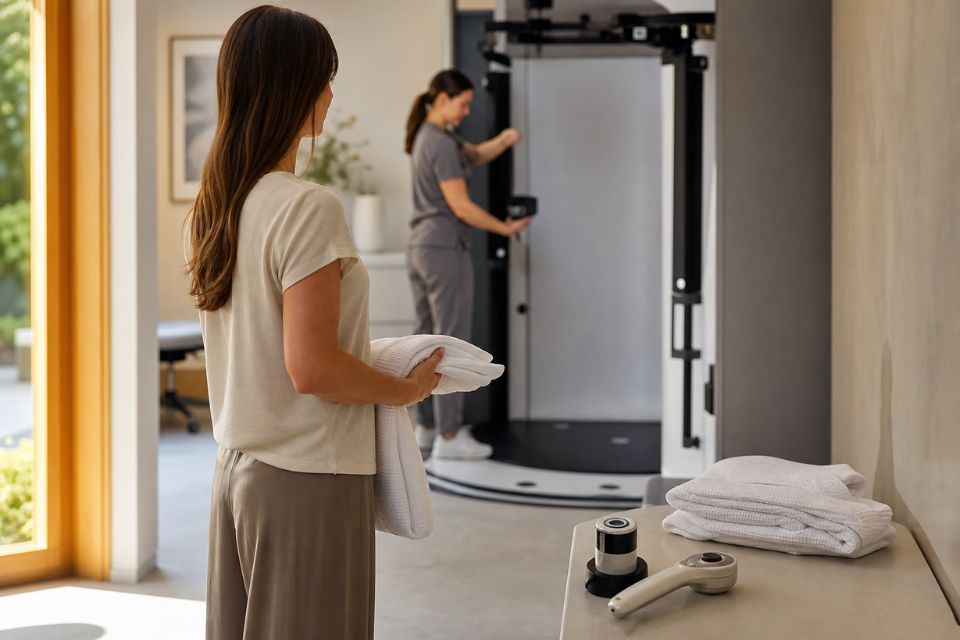
Skintel is a diagnostic skin imaging service. Its current four-step approach includes full-body scanning or body mapping, high-magnification dermoscopy of selected lesions, optical biopsy using confocal microscopy when clinically appropriate, and review by accredited skin cancer doctors. A diagnostic report and follow-up recommendations are provided after assessment.⁹˒¹⁰
The Skintel workflow is designed to assess the broader pattern of the skin as well as lesions that need closer review. Melanographers guide patients through the imaging process, while accredited skin cancer doctors review the findings and prepare the diagnostic report.⁹˒¹⁰
Where a lesion remains diagnostically uncertain after clinical examination and dermoscopy, reflectance confocal microscopy may provide additional non-invasive diagnostic information. It is not required at every appointment and does not replace a necessary surgical biopsy.
If treatment, surgical biopsy or excision is required, it is managed by the patient’s treating or referring clinician rather than by Skintel.
What does skin imaging cost at Skintel?
For current Skintel fees, please visit our Skin Imaging Fees page or contact the Skintel team directly before booking.¹¹
We will always discuss the cost of any additional optical biopsy with you before proceeding.¹¹
What should you confirm before booking?
Before attending an advanced skin imaging appointment, it is helpful to confirm:
-
the clinic fee for the appointment you are booking;
-
what services are included in that fee;
-
whether an additional fee applies if RCM is clinically recommended;
-
whether a Medicare benefit is expected to apply to any part of the appointment;
-
whether your private-health policy offers a relevant benefit;
-
whether the insurer requires a particular receipt, provider type or supporting documentation; and
-
your likely out-of-pocket cost.
Not sure what your cover includes?
If you are considering advanced skin imaging and are unsure what may be covered, contact Skintel to understand the appointment fee and contact your health insurer directly to confirm any policy benefit.
To arrange a diagnostic skin imaging assessment, Book a skin imaging assessment at Skintel.
Medical and financial disclaimer
This article provides general information only. It is not financial, insurance or individual medical advice. Medicare and private-health benefits can change and depend on the service, provider, clinical circumstances and your policy. Confirm current fees, possible Medicare benefits and private-health benefits directly with the clinic, Services Australia and your insurer before attending.
If you have a new, changing, bleeding, painful or otherwise concerning lesion, seek prompt medical assessment rather than delaying care because of uncertainty about costs or cover.
Frequently Asked Questions
Is confocal microscopy covered by Medicare in Australia?
No. Reflectance confocal microscopy, also called optical biopsy, does not attract a Medicare rebate in Australia.¹˒³ The full cost of reflectance confocal microscopy is borne by the patient. RCM is a non-invasive diagnostic imaging method that may provide additional information about selected uncertain lesions, but it does not replace surgical biopsy when tissue diagnosis is clinically required.
Is optical biopsy covered by private health insurance?
Reflectance confocal microscopy, sometimes called optical biopsy, does not attract a Medicare rebate in Australia. The full cost of reflectance confocal microscopy is borne by the patient.¹˒³ If you need clarification about the cost of RCM at Skintel, contact the Skintel team before booking or before agreeing to additional imaging.
Is mole mapping covered by Medicare?
No dedicated Medicare rebate applies to total body photography or mole mapping as an imaging component. A medical consultation associated with skin assessment may have a different funding position depending on the consultation, clinical circumstances and relevant Medicare requirements.¹˒² Ask the clinic directly about the appointment fee and any potential Medicare benefit; do not assume a routine mole-mapping appointment is Medicare-rebatable.
Does private health insurance cover mole mapping?
Some private health funds may provide a partial benefit for mole mapping, but this is not universal. Whether any benefit is available depends on the particular insurer, policy, level of cover, annual limits and other policy conditions.⁷ Contact your health fund before booking to confirm whether it provides a benefit for the specific service and to understand your likely out-of-pocket cost.
Is a skin cancer check covered by Medicare?
Not automatically. Medicare does not offer a dedicated rebate simply for routine skin cancer screening. Depending on the nature of the medical consultation, clinical circumstances and applicable Medicare requirements, a Medicare benefit may apply to some services.¹˒²
Is total body photography the same as mole mapping?
Total body photography is a key component of mole mapping. It creates systematically captured baseline images of the skin, allowing future photographs to be compared for new or changing lesions. Digital dermoscopy may also be used to record selected moles in greater detail. Mole mapping supports clinical surveillance; it does not independently diagnose melanoma or replace clinician assessment.⁵˒⁶
Why can advanced skin imaging cost more than a standard consultation?
Advanced imaging may involve specialised equipment, trained imaging staff, time to capture and organise images, medical review and diagnostic reporting. RCM is also a specialised technique that can provide detailed non-invasive information about selected skin lesions.³˒⁴ The relevance and value of any imaging service should be considered in relation to your individual risk, the lesion and whether it is likely to assist the clinical decision.
Can I claim skin imaging through my private health fund?
Some private health policies may provide a benefit for particular skin-imaging or mole-mapping services, but private health insurance does not automatically cover outpatient skin imaging. Cover depends on the policy and may be affected by limits, waiting periods and exclusions.⁷ Check directly with your insurer before attending and ask the clinic what information it can provide on the receipt.
What happens if a suspicious lesion needs a surgical biopsy?
A surgical biopsy removes tissue from a lesion so it can be examined by a pathology laboratory. This is different from non-invasive optical biopsy or RCM. Medicare arrangements for consultations, procedures and pathology differ from the funding position for advanced skin imaging, and any available benefit depends on the specific service and applicable rules.¹ Discuss expected costs and next steps with the treating clinician arranging the biopsy.
Conclusion
Costs and cover for advanced skin imaging in Australia can be confusing because consultations, total body photography, digital dermoscopy, RCM and surgical biopsy are different services.
Routine screening does not have a dedicated Medicare rebate, while total body photography and reflectance confocal microscopy do not attract dedicated Medicare rebates for the imaging component. The full cost of RCM is borne by the patient. Some private-health policies may provide a partial benefit for mole mapping or skin checks, depending on the policy.¹˒²˒⁷
The most reliable approach is to confirm the clinic fee, what is included, any possible Medicare benefit and any private-health contribution before your appointment. Decisions about advanced skin imaging should be based on the clinical question and your individual risk, not on reimbursement alone.
References
-
Australian Government Department of Health, Disability and Ageing. Medicare Benefits Schedule Online. Canberra: Australian Government; accessed 2026 Sep 6.
-
Services Australia. What’s covered by Medicare. Canberra: Australian Government; accessed 2026 Sep 6.
-
Melanoma Institute Australia. Confocal microscopy: patient information. Sydney: Melanoma Institute Australia; 2022.
-
Longo C, Ragazzi M, Rajadhyaksha M, et al. Reflectance confocal microscopy: an effective tool for diagnosing melanoma and non-melanoma skin cancers. J Am Acad Dermatol. 2018;79(2):247-257.
-
Ji-Xu A, Dinnes J, Matin RN. Total body photography for the diagnosis of cutaneous melanoma in adults: a systematic review and meta-analysis. Br J Dermatol. 2021;185(2):302-312.
-
Tzellos T, Kyrgidis A, Zouboulis CC. The value of total body photography for the early detection of melanoma: a systematic review. J Eur Acad Dermatol Venereol. 2021;35(2):230-237.
-
PrivateHealth.gov.au. Australian health insurance information. Canberra: Commonwealth Ombudsman; accessed 2026 Sep 6.
-
Kittler H, Pehamberger H, Wolff K, Binder M. Diagnostic accuracy of dermoscopy. Lancet Oncol. 2002;3(3):159-165.
-
Skintel. Our services: skin health and skin cancer detection. Melbourne: Skintel; accessed 2026 Sep 6.
-
Skintel. The Skintel skin check. Melbourne: Skintel; accessed 2026 Sep 6.
-
Skintel. Skin cancer check fees and cancellation policy. Melbourne: Skintel; accessed 2026 Sep 6.